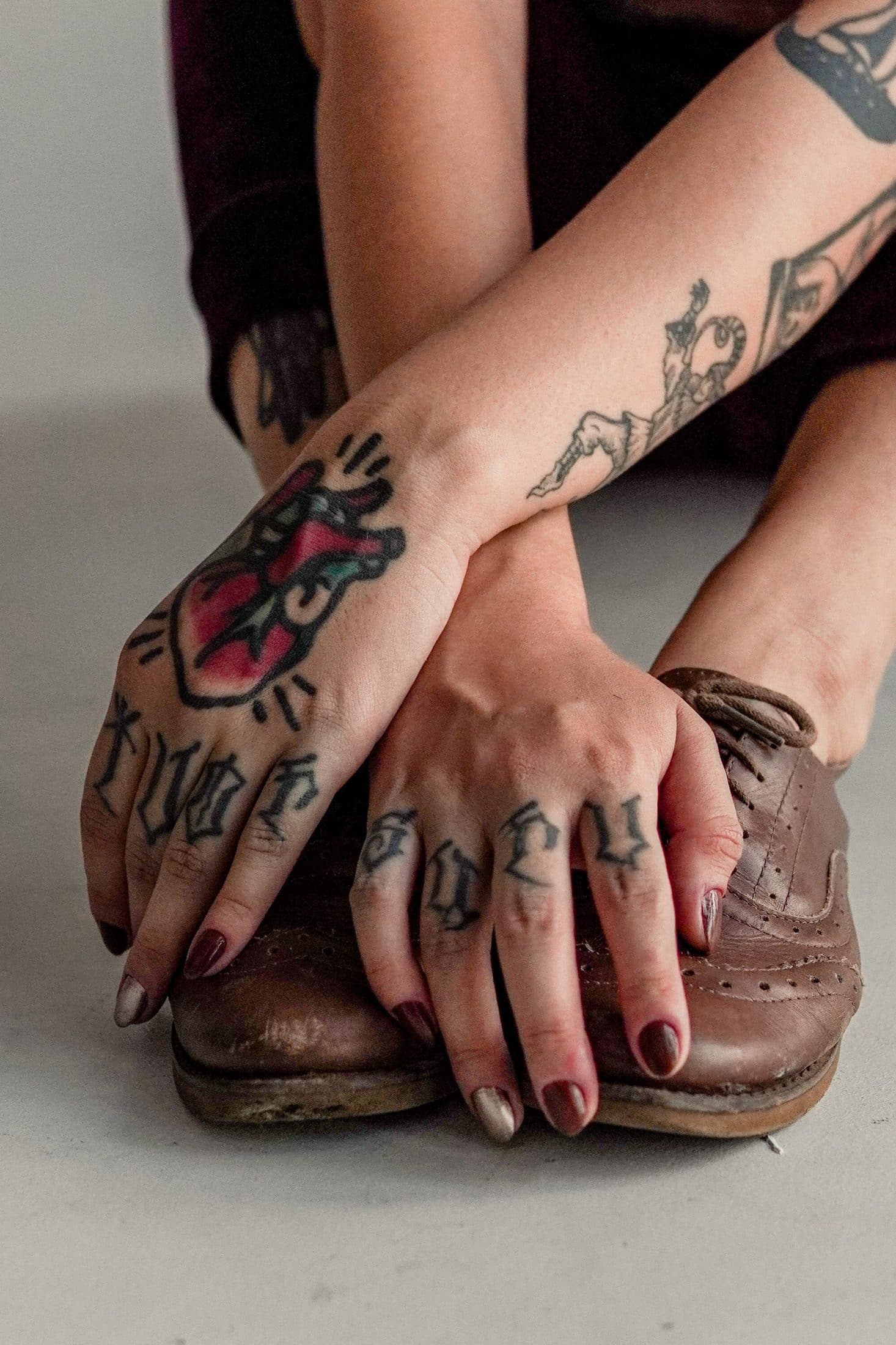

Tattoo aftercare instructions explain in a few sentences how long the cover stays on, how to clean and moisturise, what is off limits for two to four weeks and when to see a doctor. On the surface a tattoo heals in two to four weeks, full healing takes several months. Hand the instructions over in writing rather than only verbally, and send them again by email after the appointment.
- Written aftercare protects your client's skin and protects you: fewer questions, fewer free touch-ups, a documented handover.
- The core rules are short: cover as instructed, wash with mild soap, moisturise thinly, do not scratch, no sun and no water for two to four weeks.
- Think in three phases: day 1 to 3, week 1 to 2, week 3 to 4 and beyond. That way everyone knows what is normal right now.
- Hand the instructions over twice: once on paper or as a PDF in the studio, once automatically by email after the appointment.
- Ask for a photo after four weeks. It is the simplest quality check and gives you healed portfolio images at the same time.
Contents
Aftercare decides about half the result. You can work cleanly and precisely and the tattoo will still look patchy after six weeks because somebody went to the sauna on day three. That is why the instruction sheet is not a leaflet, it is part of your work.
Why do aftercare instructions need to be in writing?
Explaining it verbally is well meant, but after four hours in the chair nobody remembers twelve rules. A sheet or a PDF costs you effort once and nothing afterwards. And it works in three directions at the same time.
- Fewer questions: the usual worries about scabbing, itching and showering are answered in advance and your inbox stays calmer.
- Fewer free touch-ups: if ink drops out because the tattoo went into chlorinated water, that is a different conversation than with no instructions at all.
- Documentation: in the consent form the client confirms they received the aftercare. The two belong together.
The standard rules of tattoo aftercare
The points below are common practice in the industry, not medical instructions. Your own advice always takes priority, especially on the question of how long the cover stays on.
- Keep the cover or film on for as long as you say. Classic film usually two to four hours, adhesive film dressings such as second skin products several days depending on the brand.
- Wash your hands before touching it, always, even on day five.
- Clean it with lukewarm water and mild, fragrance free soap, gently and without a flannel.
- Pat it dry with a clean disposable towel, no rubbing, not with the bathroom towel.
- Moisturise thinly with the recommended cream, two or three times a day. More does not help here.
- Do not scratch and do not pick, however much it itches and flakes.
- No sun and no tanning bed on the fresh area, sun protection later on.
- No pool, lake, sea or sauna for two to four weeks.
- No tight clothing rubbing on the spot, and no sport that pulls hard on it.
- In case of strong redness, pus or fever see a doctor and let your artist know.
How does a tattoo heal, phase by phase?
| Phase | What to do | What to avoid |
|---|---|---|
| Day 1 to 3 | Keep the cover on as instructed, then wash and moisturise thinly two or three times a day | Baths, sport, tight clothing, heavy drinking, sun |
| Week 1 to 2 | Keep washing and moisturising, live with the flaking and the itch | Scratching, picking scabs, swimming, sauna, tanning beds |
| Week 3 to 4 and beyond | Care for the skin, use sun protection, assess the result and send a photo | Direct sun without protection, exfoliating the area |
On the surface a tattoo has healed after two to four weeks. Full healing, down into the deeper layers of skin, takes several months. That is also why a touch-up makes no sense after ten days and belongs much later. How to handle those appointments cleanly is in the article on touch-ups.
Tell your clients in advance what happens in week two. When the skin flakes and the colour looks dull, many assume their tattoo is ruined and message you on a Sunday night. Someone who knows this is part of the process stays calm and keeps their hands off it.
What is the best way to hand the instructions over?
A combination of two channels works most reliably. One in the studio so the information is there immediately, one digital so it does not get lost.
- On paper: a single sheet you hand over at the end. Always works, but also gets lost.
- By email after the appointment: this message can be automated and always arrives. Templates for it are in the article on appointment reminders.
- A QR code in the studio: at the booth or at the counter, leading to a page with your instructions.
- In your app: stored as a PDF on the appointment or with the client, so it is still findable in two years.
What else belongs in your instructions
- A contact for questions: an address or number to reach when something looks odd. It prevents panicked posts in random forums.
- Your touch-up rule: until when a touch-up is free, from when it is not, and what applies if the aftercare was ignored.
- A request for a photo after four weeks: good for your portfolio, good for your quality control and a natural reason to be in touch again.
- A note on clothing: which placements tolerate what. For ribs, feet and wrists this matters more than people think.
Template: aftercare instructions to copy
Your aftercare in short

Your tattoo is a fresh wound. How good it looks is decided in the next four weeks.

Day 1 to 3
Keep the cover on for as long as I told you. Wash your hands before touching it. Clean the tattoo two or three times a day with lukewarm water and mild, fragrance free soap, pat it dry with a clean disposable towel and apply a thin layer of the recommended cream. Thin matters, the skin needs to breathe.

Week 1 to 2
It itches, it flakes, it looks dull. That is normal. Do not scratch, do not pick. Keep washing and moisturising thinly. No pool, no lake, no sea, no sauna, no tanning bed.

Week 3 to 4
The surface is usually healed, underneath the skin keeps working for several months. From now on use sun protection on the area, every time.

Please avoid
Sun and tanning beds, baths and sauna, tight or rubbing clothing, scratching, other creams without asking me first.

Get in touch
if the area becomes very red or hot, if pus appears or if you develop a fever. Please have it checked by a doctor and send me a short message.

After four weeks
Send me a photo of the healed tattoo. If anything needs a touch-up, we will book a time for it.

Questions? Message me any time at [contact].
Frequently asked questions
How long does the film stay on after getting tattooed?
It depends on the material. Classic cling film or a simple dressing usually stays on for two to four hours, adhesive film dressings for several days depending on the product. What counts is always the artist's instruction, because they know what they covered the piece with.
How long does a tattoo take to heal?
On the surface a tattoo is healed after two to four weeks, which is when the skin has closed again. Full healing, down into the deeper layers, takes several months. That is why a touch-up is sensibly booked after that period rather than ten days later.
Can you shower with a fresh tattoo?
A short shower is usually fine, a long bath is not. The area should not soak and should not sit under the jet. Afterwards pat it dry with a clean disposable towel and moisturise thinly. Pools, lakes, the sea and saunas stay off limits for two to four weeks.
What should I do if a tattoo looks infected?
Mild redness in the first days is normal. If the area becomes very red or hot, if pus appears or a fever develops, it needs to be checked by a doctor without delay. Ask your clients to let you know in that case, so you know how the healing went.
Do I have to give clients written aftercare instructions?
It is not required everywhere, but it always makes sense. In writing you have a record that you informed the client, and your client can read up instead of guessing. Best practice is handing them over in the studio and sending them automatically by email after the appointment.
By the Taddoo team, built by artists and booking managers for artists. Published September 9, 2026, last updated September 9, 2026.