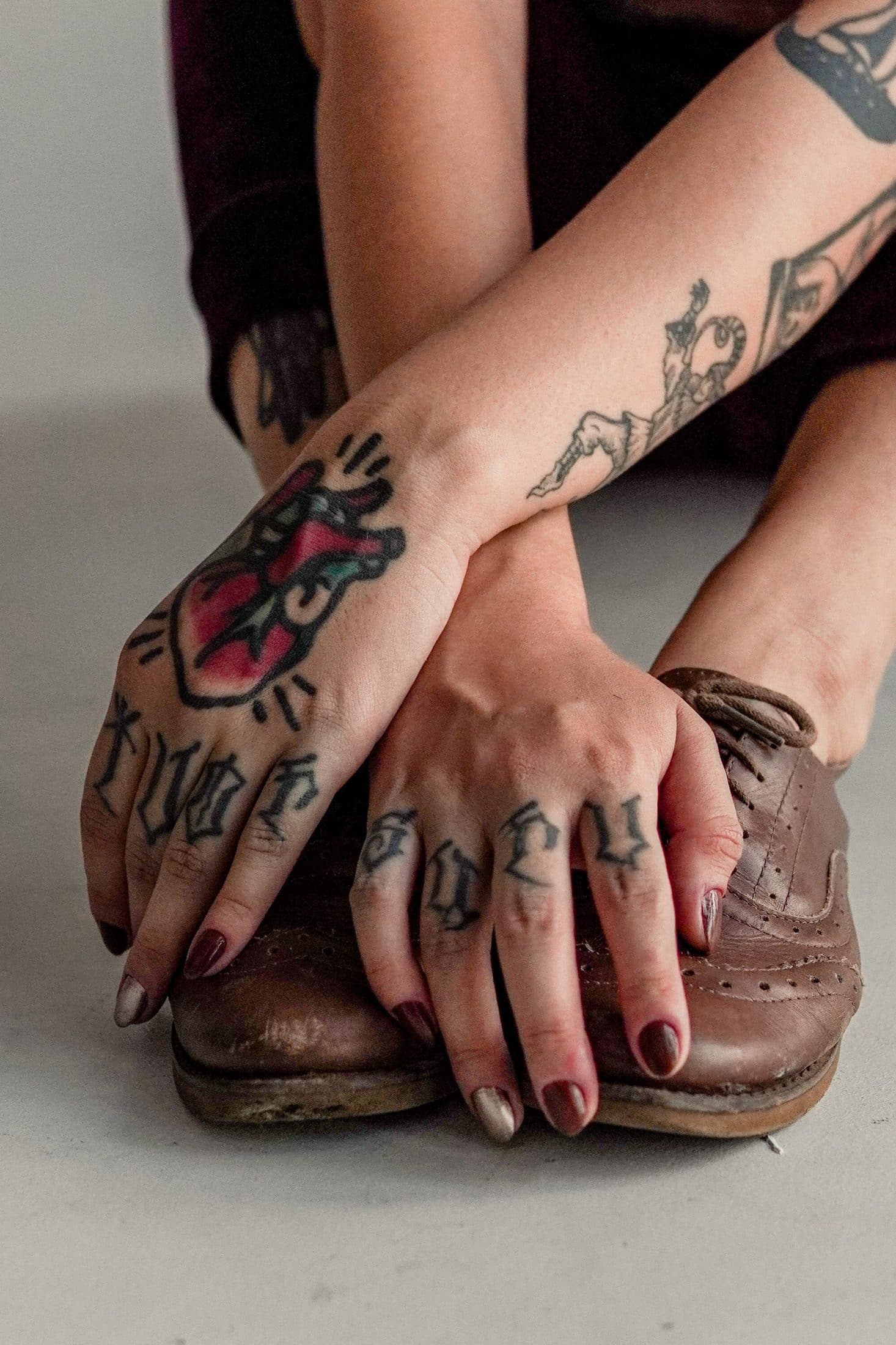

A touch-up means reworking the spots where colour is missing once a tattoo has healed. It happens at the earliest after full healing, in practice 4 to 8 weeks after the session, and many studios offer it within 3 to 6 months. Industry practice is one free touch-up inside that window if the client followed the aftercare. Sun damage, picking, hands and fingers or a request after the deadline are usually charged.
- Touch-ups are part of the craft. Handling them with a written rule reads as professional, not as generosity.
- Earliest after full healing, in practice 4 to 8 weeks after the session.
- One free touch-up within 3 to 6 months when aftercare was followed is common industry practice.
- Touch-ups belong in short dedicated windows of 20 to 45 minutes, not in your session slots.
- A photo taken right after the session is your most important documentation for later discussions.
Contents
Every tattoo heals differently. Some areas do not take the pigment evenly, a few lines look thinner after four weeks than they did on the day. That is not a mistake, it is part of the craft. It only becomes a problem when you have no rule and negotiate every request separately.
What is a touch-up and when does it make sense?
A touch-up means reworking the individual spots where colour or saturation is missing after healing. It typically affects edges, very light tones, large filled areas and places that move a lot. It corrects the existing piece, it does not change it.
Timing decides everything. On the surface a tattoo is healed after 2 to 4 weeks, but the skin needs several months to settle fully. Going in too early achieves nothing, because the skin is still working and the image is still changing. In practice the earliest sensible date is 4 to 8 weeks after the session.
For the assessment to be fair at all, the aftercare has to have been followed. How to communicate it so it actually gets done is covered in the article on aftercare.
Three things are worth separating out clearly, because they are not touch-ups: extending a piece, changing the design, and refreshing a tattoo that is several years old. Those are regular sessions with their own price and duration. Filing them under touch-up gives away working hours and confuses what your clients expect.
Free or paid: what is common in the industry?
The most widespread practice: one free touch-up within a fixed window, usually 3 to 6 months after the session, provided the aftercare was followed. Anything outside those conditions gets charged. This is a habit rather than a rule, but clients expect it, so put your own version in writing.
| Situation | Common practice | Reasoning |
|---|---|---|
| Colour dropped out in places, aftercare followed | Free within the window | It can happen with any piece, it is part of the work |
| Client picked at it or skipped the aftercare | Paid | The cause is not the work itself |
| Sun or tanning beds during healing | Paid | Avoidable stress on fresh work |
| Hands, fingers, feet, lips | Paid or excluded in advance | These areas are known to heal unevenly |
| Request after the window closes | Paid, often at the minimum charge | The piece has aged rather than just healed |
| Client wants the design changed | Paid as a new session | That is new work, not a touch-up |
For hands, fingers and feet the conversation belongs before the session, not after it. A client who knows in advance that these areas often need reworking and that it costs money will not be disappointed later.
How to write your touch-up rule
A touch-up is possible at the earliest six weeks after your session, before that the skin has not fully healed.
Within six months of the session one touch-up is free, provided you followed the aftercare.
Touch-ups are charged for sun or tanning damage, for areas that were picked at, for tattoos on hands, fingers, feet and lips, and after the six months have passed.
Book a touch-up through my touch-up link, I keep dedicated windows for it and plan 30 minutes per appointment.
Those four sentences belong in three places: the aftercare sheet the client gets after the session, your terms on the website, and the appointment confirmation. Mention them only when somebody asks for a free slot and you end up arguing.
How do you schedule touch-ups without losing slots?
A touch-up rarely takes longer than 30 minutes, yet it can block half a day when it gets squeezed between two sessions. The answer is dedicated windows instead of one-off exceptions in the calendar.
- Fixed touch-up windows: every other Friday afternoon, say, or one hour at the end of a studio day. Four touch-ups in a row are calmer than four scattered ones.
- Short slots: 20 to 45 minutes depending on size, with 10 minutes of buffer for setup and cleaning.
- A separate booking link without payment: the client books directly, but only inside the released windows. No deposit, because no money changes hands.
- Its own appointment type and colour: that way your week view immediately shows how much unpaid time you have committed.
- Use the weak hours: place touch-up windows in hours that sell badly for long sessions anyway.
Paid touch-ups, on the other hand, work like normal appointments, minimum charge and deposit included. How to keep both types clean in one calendar is covered in the article on appointment management.
Documentation: photos at the end of the session
Most touch-up disputes happen because nobody remembers what the piece looked like fresh. A photo right after the session, in daylight and without flash, settles that. It records saturation, line weight and coverage on day zero.
Attach that photo to the appointment and to the client, not to your camera roll. Together with the date, the inks used and a note on the placement you have everything you need for an honest assessment. More on this in the article on client records.
What to tell the client without being asked
- Right after the session: that a touch-up is normal and does not mean something went wrong.
- With the aftercare sheet: your four-sentence rule, including the window and the touch-up link.
- After about six weeks: a short message asking how the piece healed. It reads as attentive and brings your touch-ups in batches instead of scattered.
- At the touch-up itself: a second photo for comparison, so the documentation stays complete.
Frequently asked questions
When can I get a tattoo touched up?
At the earliest once the skin has fully healed. On the surface that takes 2 to 4 weeks, and in practice most artists wait 4 to 8 weeks before doing a touch-up. Before that you cannot judge whether pigment is really missing, because the piece is still settling during the healing phase.
Are tattoo touch-ups free?
Each studio decides that itself, there is no legal rule. Industry practice is one free touch-up within 3 to 6 months of the session if the aftercare was followed. Sun damage, areas that were picked at, tattoos on hands and feet and requests after the window has closed are usually charged.
How long does a touch-up appointment take?
Usually 20 to 45 minutes, depending on the size and the number of spots. Many artists keep dedicated touch-up windows and plan 30 minutes plus 10 minutes of buffer. Larger corrections or whole filled areas are no longer a touch-up but a regular session with its own price.
Why do some studios charge for touching up hands and fingers?
Because those areas are known to heal unevenly. Skin on hands, fingers, feet and lips renews quickly and takes daily wear, so lines fade there more often than elsewhere. Many studios therefore exclude these placements from the free touch-up rule and say so before the session starts.
How often can a tattoo be touched up?
Technically more than once, but usually once is enough. Every pass stresses the skin again, so a full healing period should sit between two rounds. If two touch-ups on the same spot still do not hold, the placement is normally the reason rather than the work.
What if a client asks for a free touch-up after a year?
Point politely to your window and offer the appointment as a paid touch-up, often at your minimum charge. After a year a piece has aged, which is no longer a healing question. What matters is that the window was already stated in the aftercare sheet, then the conversation stays short and factual.
By the Taddoo team, built by artists and booking managers for artists. Published September 9, 2026, last updated September 12, 2026.