
The best way to sell flash tattoos is a dedicated flash page instead of story sheets: every design is listed with size, price, duration and free dates, the client books and pays the deposit in one go, and one-off designs are taken once booked and cannot be booked again. Instagram stays the shop window that links to the page. That removes 'is this still available?' messages, double bookings and non-binding promises.
- A story is a shop window for 24 hours, not a checkout. Selling happens on a page that stays.
- A flash page settles design, size, price, date and deposit before the first message is written.
- One-off designs are taken once booked: marked as taken or hidden, either way no longer bookable. That ends the 'is this still available?' question and prevents double bookings.
- Price flash by duration and hourly rate, with a fixed deposit for small pieces and a percentage for larger ones.
- A flash day works with fixed slots, a simultaneous drop and a waiting list for replacements.
Contents
Sunday evening you post a flash sheet with twelve designs to your story. On Monday you have forty messages: 'Is the snake still available?', 'How much is the dagger?', 'Can you do it smaller?'. You promise two designs twice by accident, three people go silent after your yes, and on Tuesday the story is gone. The sheet was good, the sales channel was not.
Why do flash sheets in stories convert so badly?
A story is a good shop window and a bad checkout. It creates attention for 24 hours, after that everything is manual: check availability, quote the price, find a date, ask for the deposit, cross off the design. Five steps per client, each can stall.
- 24 hours of visibility: whoever wants a flash piece on Wednesday cannot find Sunday's sheet anymore.
- 'Is this still available?' DMs: you answer the same question three times per design, often with an answer that is already outdated.
- Double bookings: two people ask about the same design ten minutes apart, you say yes to both, one ends up angry.
- No deposit: a yes by DM is non-binding. People without money down show up less often, see the article on no-shows.
- No price, no size: without details everyone asks individually. With details everyone still asks whether it could be smaller.
How does a flash page flip the process?
A flash page is a subpage of your link in bio where every design is a tile: image, description, placements, sizes with price and duration. The client picks design and size, sees the free dates, books a slot and pays the deposit, none of it in your inbox. In the story the message comes first, then the clarification, then maybe the booking. On the flash page the booking comes first, because price, size and date are fixed before anyone taps 'book'. What reaches you is an appointment in your calendar with the design as reference: confirmed once the deposit is paid, reserved if you take no deposit online.
The second effect: one-off designs are taken once booked. You decide whether they stay on the page marked as taken or disappear entirely; either way nobody can book them again. Nobody asks whether the snake is still available, because you can see it on the snake. If the client cancels, it is free again. The story still matters, with a new job: it shows the design and links to the page instead of being the checkout. More on the principle in the article on online booking.
How do you price flash tattoos?
Flash is cheaper than custom because the design exists and you tattoo it quickly. Cheaper does not mean cheap. The base is still your hourly rate plus materials, plus the value of the design: how long does it take at this size, and what premium does a one-off design deserve?
| Size | Duration | Price range | Deposit |
|---|---|---|---|
| up to 5 cm | 60 to 90 minutes | 150 to 220 CHF or euros | fixed, 50 CHF or euros |
| around 9 cm | about 2 hours | 250 to 350 CHF or euros | 20 to 30 percent, 60 to 100 |
| around 15 cm | half a day | 450 to 700 CHF or euros | 20 to 30 percent, 100 to 200 |
These ranges are benchmarks, not your price list. A linework piece on the ribs takes longer than on the forearm, so store a separate duration per size and limit the placements. For deposits: a fixed amount for small pieces, because 20 percent of 150 is too little commitment, a percentage for larger ones. The rules are in the article on deposits.
One-off or repeatable: which sells better?
Both, but to different clients. A one-off flash is a unique piece, nobody else wears this design. A genuine selling point with collectors and for designs with your personal signature. Scarcity works honestly here because it is true: gone is gone. Repeatable flash pieces are your classics: rose, dagger, cross, banner script. They carry the calendar in quiet weeks, because new clients like to start with a safe design. They need no scarcity, only a fair price.
- One-off: new series, designs with a recognisable signature, flash days. Priced slightly above the classic.
- Repeatable: classics, entry-level designs, gap fillers for walk-ins. Priced by duration, no premium.
- Mix: ten repeatable classics plus eight one-off designs a month keep the calendar full and justify regular drops.
How do you organise a flash day?
A flash day is a day with fixed slots on which you tattoo flash only: six to eight appointments, often with new clients who later return for custom work.
- Set the date and the quota: one day, for example 10 am to 6 pm with seven slots. Per slot, design duration plus 15 minutes turnaround.
- Prepare and publish the designs: eight to fifteen designs with size, price and duration, all one-off. Drafts stay hidden until all are ready, then go live at once.
- Announce with dates: seven days ahead, a post and a story with the flash day date and the drop date.
- Book through the page, not by DM: the link sits in your bio and in every story. 'Is this still available?' DMs get the standard reply below.
- Waiting list for replacements: anyone who misses out signs up. On a cancellation you message five people from there instead of posting a new story, see the article on waiting lists.
- The day itself with fixed slots: stencils prepared the evening before, deposits paid, people show up on time. No crowd at 10 am, no idle time at 3 pm.
The most important point is the second one: all designs go live together, otherwise every single design triggers its own small DM wave. Only a drop can be announced.
Three templates to copy
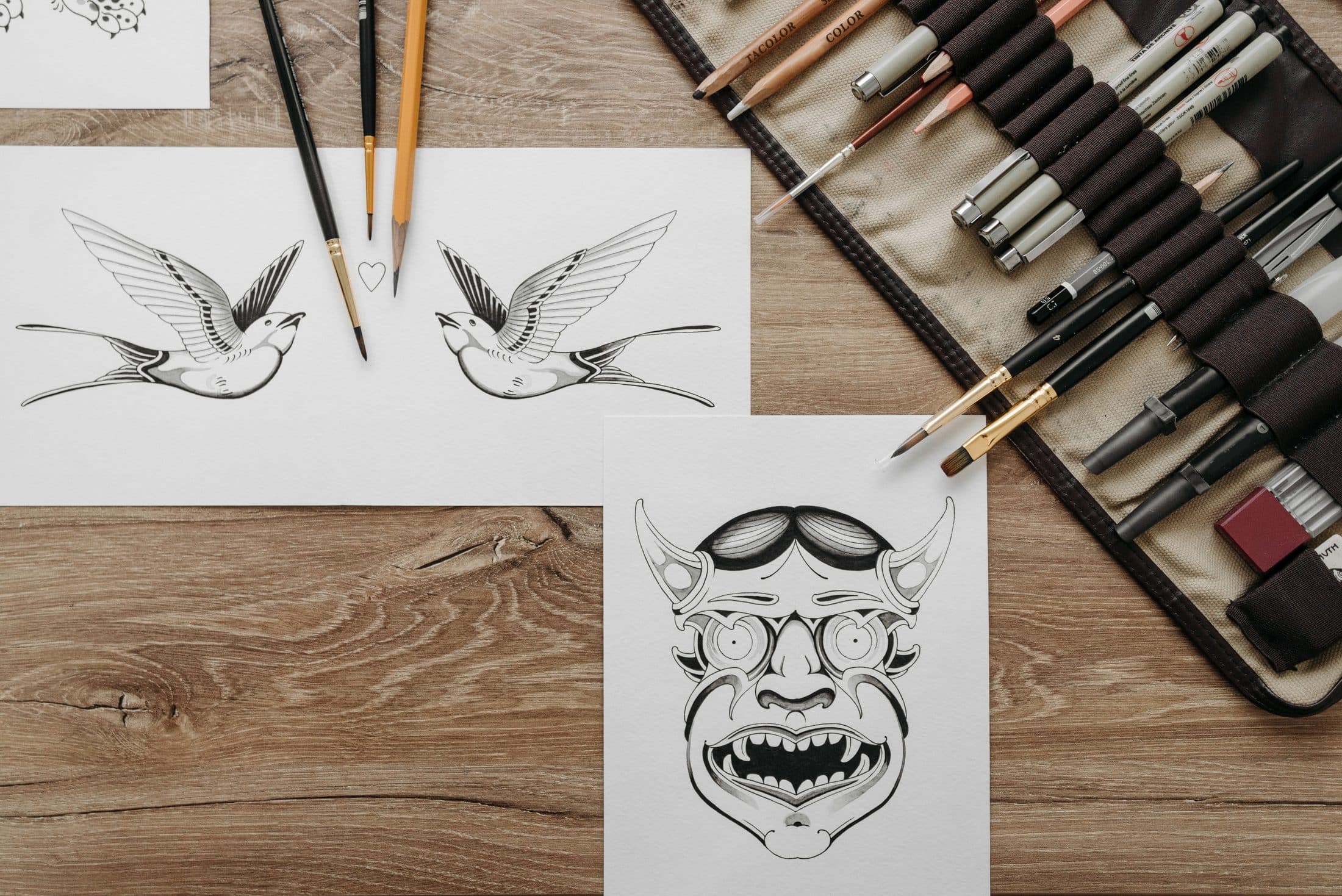
New flash series: twelve designs, all one-off.
Each design is available once, after that it shows as taken on the page.
Sizes, prices and free dates are listed with each design, book via the link in my bio.
The deposit secures your design, the rest is due on the day.
I cannot answer 'is this still available' DMs: whatever is on the page is available.
Hi [name], thanks for your interest!
Whatever shows as available on my flash page is still free, booked designs are marked as taken.
You can pick design, size and date right here: [link]
The deposit secures the design, otherwise someone else can book it first.
Different placement or size? Send me a short note and I will check.
Flash day on Saturday 17 October, 10 am to 6 pm.
Seven slots, all designs one-off, prices from 150 CHF or euros.
The designs go live on Monday 12 October at 7 pm, link in my bio.
Booked means deposit paid. I do not hand out appointments by DM.
Missed out? Join the waiting list, cancelled slots go to people from there.
The mistakes that cost you revenue
- A sheet without prices and sizes: everyone asks individually, you answer the same question twenty times.
- Saying yes by DM without a deposit: the client does not show up, and meanwhile you turned down three other people for that design.
- Still offering booked designs as available: every enquiry about a design that is long gone is a disappointment and one more message.
- All one-off or all repeatable: without classics you lack base occupancy, without unique pieces any reason for a drop.
- Drops without announcement: posting at 11 pm unannounced sells to whoever happened to be awake.
- A flash day without fixed slots: 'just come by' means a queue at 10 am and idle time from 3 pm.
Frequently asked questions
How much does a flash tattoo cost?
Depending on size and region, 150 to 220 CHF or euros for designs up to 5 cm, 250 to 350 for around 9 cm and 450 to 700 for pieces around 15 cm. Flash usually sits below the custom price because the design is finished, but never below the studio minimum. One-off designs can carry a premium for exclusivity.
Can I tattoo a flash design more than once?
You decide that per design and communicate it up front. Flash offered as one-off is tattooed exactly once, that is a promise to the client and part of the price. Repeatable flash can be tattooed as often as you like, which is common for classics. The only thing that matters is that the label on the page or the sheet is unambiguous.
Do I need a deposit for flash?
Yes, especially for flash. The appointments are short, often with new clients, and a no-show costs you the whole slot. Common practice is a fixed 50 CHF or euros for small pieces and 20 to 30 percent for larger ones. The deposit is deducted on the day and is the moment the design is genuinely taken.
How do I announce a flash drop?
With two dates: the day the designs go live and the period in which they get tattooed. Seven days ahead a post and a story, on the day of the drop one story per design with a link to the page. State the number of designs, the price range and the note that only bookings through the page count.
How do I sell flash without Instagram DMs?
Through a flash page that lists design, size, price, duration and free dates, where the client books and pays the deposit directly. Instagram remains the shop window: story and post show the design and link to the page. DMs asking 'is this still available?' get a standard reply with the link.
By the Taddoo team, built by artists and booking managers for artists. Published September 12, 2026, last updated September 12, 2026.